

This post is an introduction to the Watermark repo that Kylos Arc created. Watermark is a local-first provenance and forensic workbench for C2PA Content Credentials, media, documents, and text.
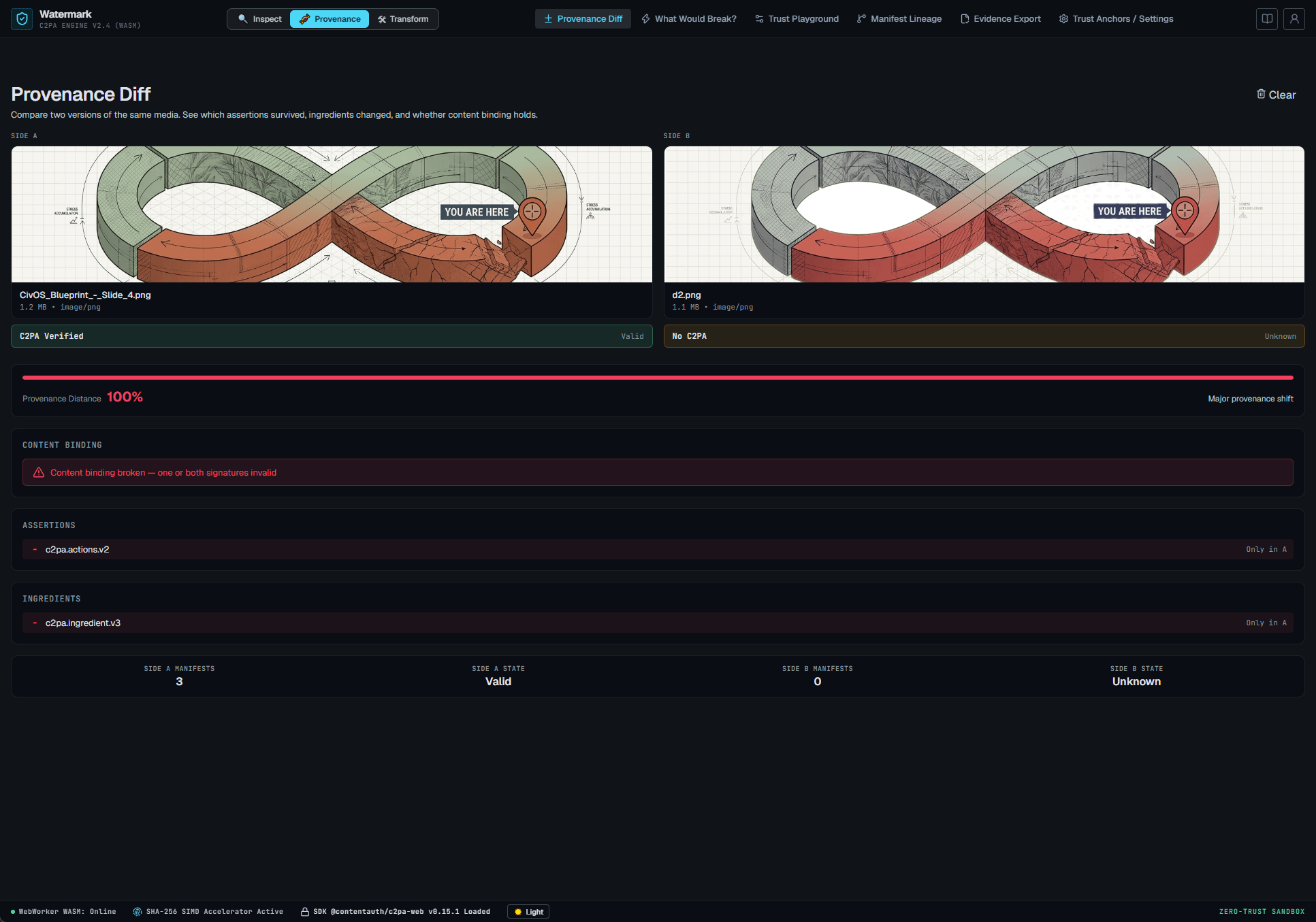
Provenance Diff
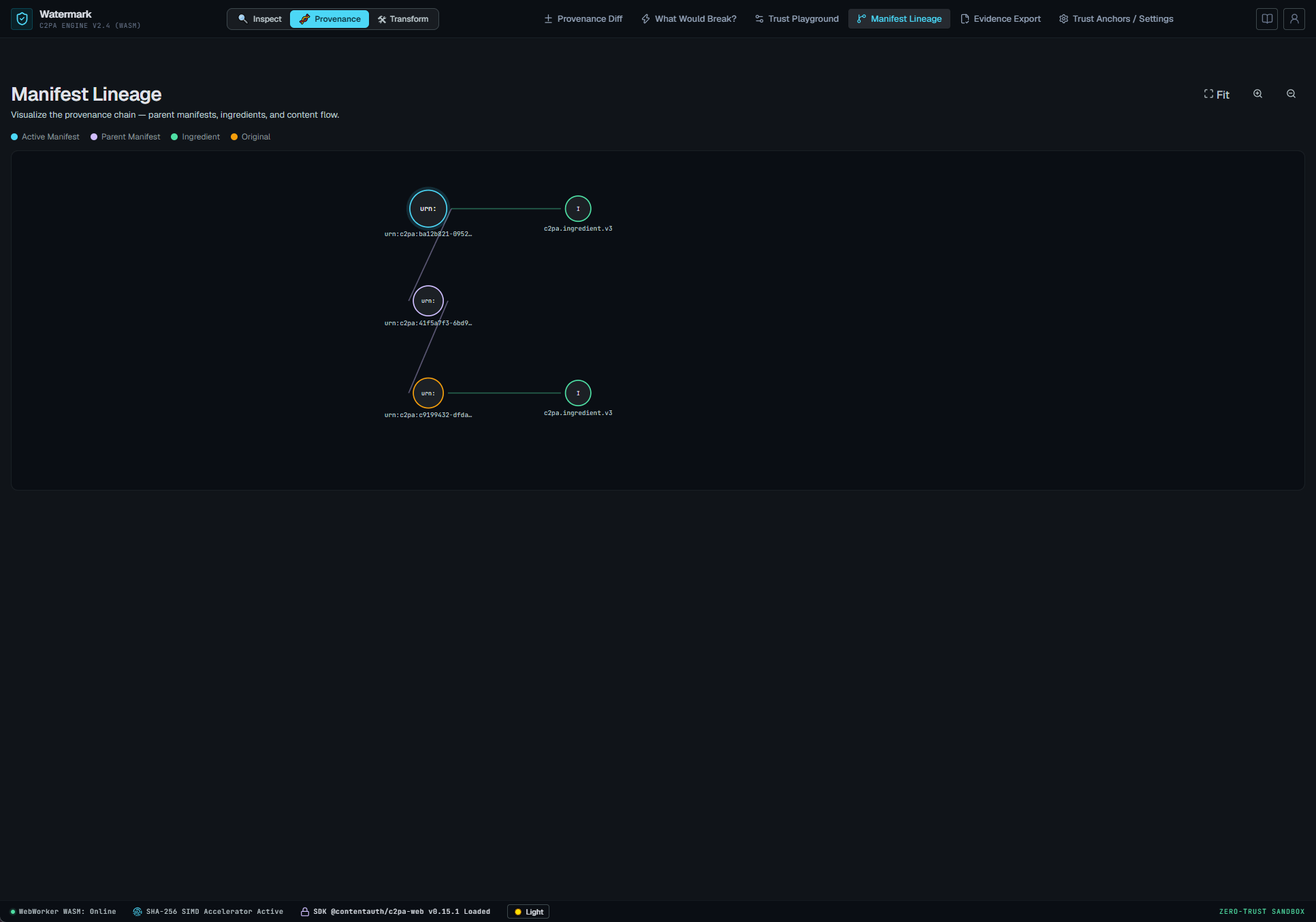
Manifest LIneage
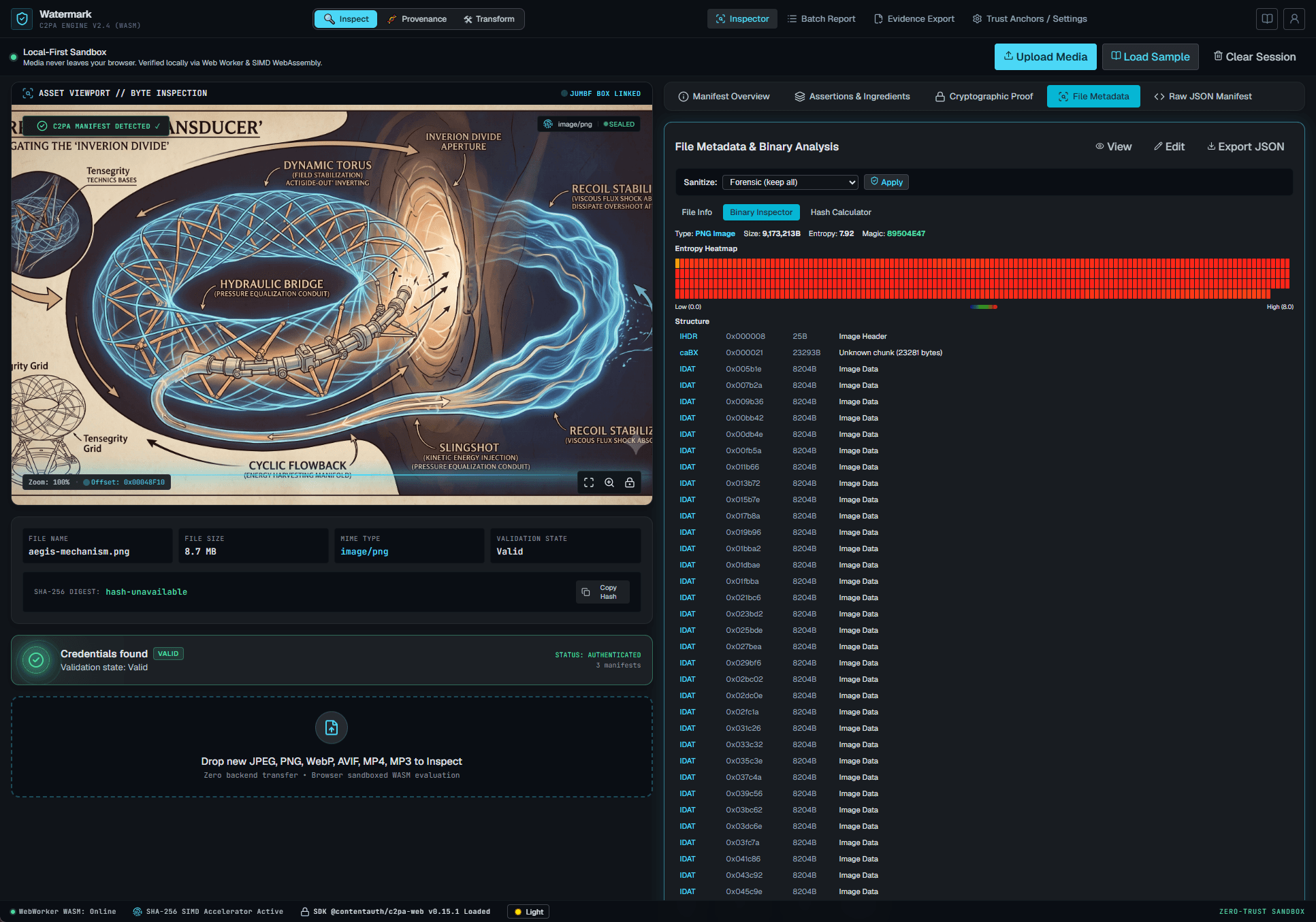
Binary Inspector
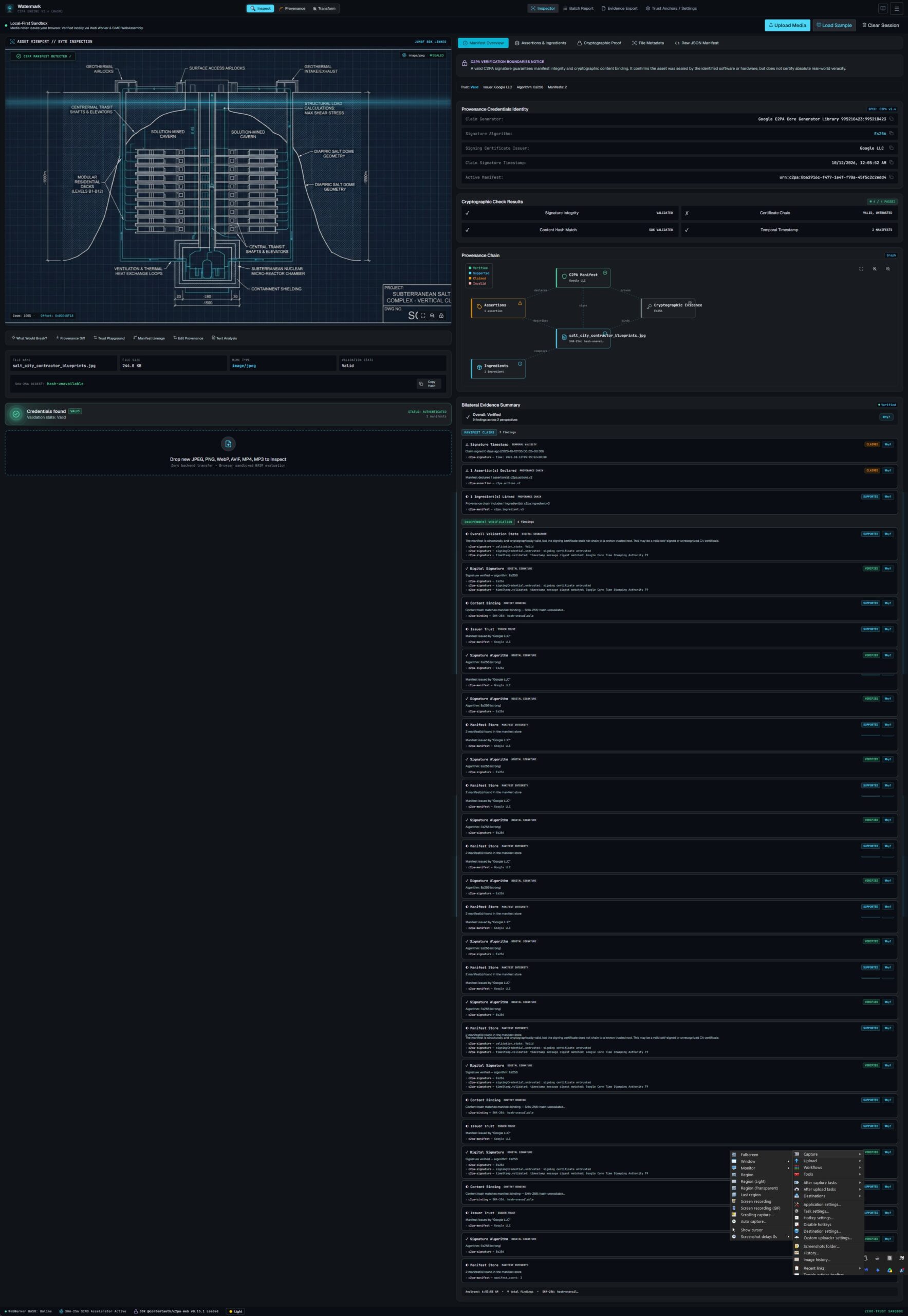
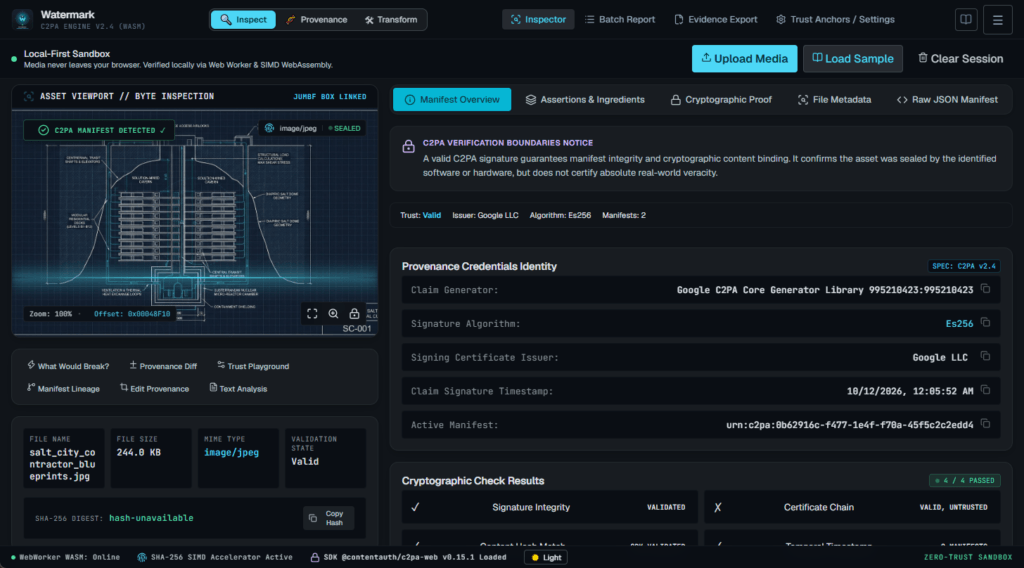
Manifest Overview
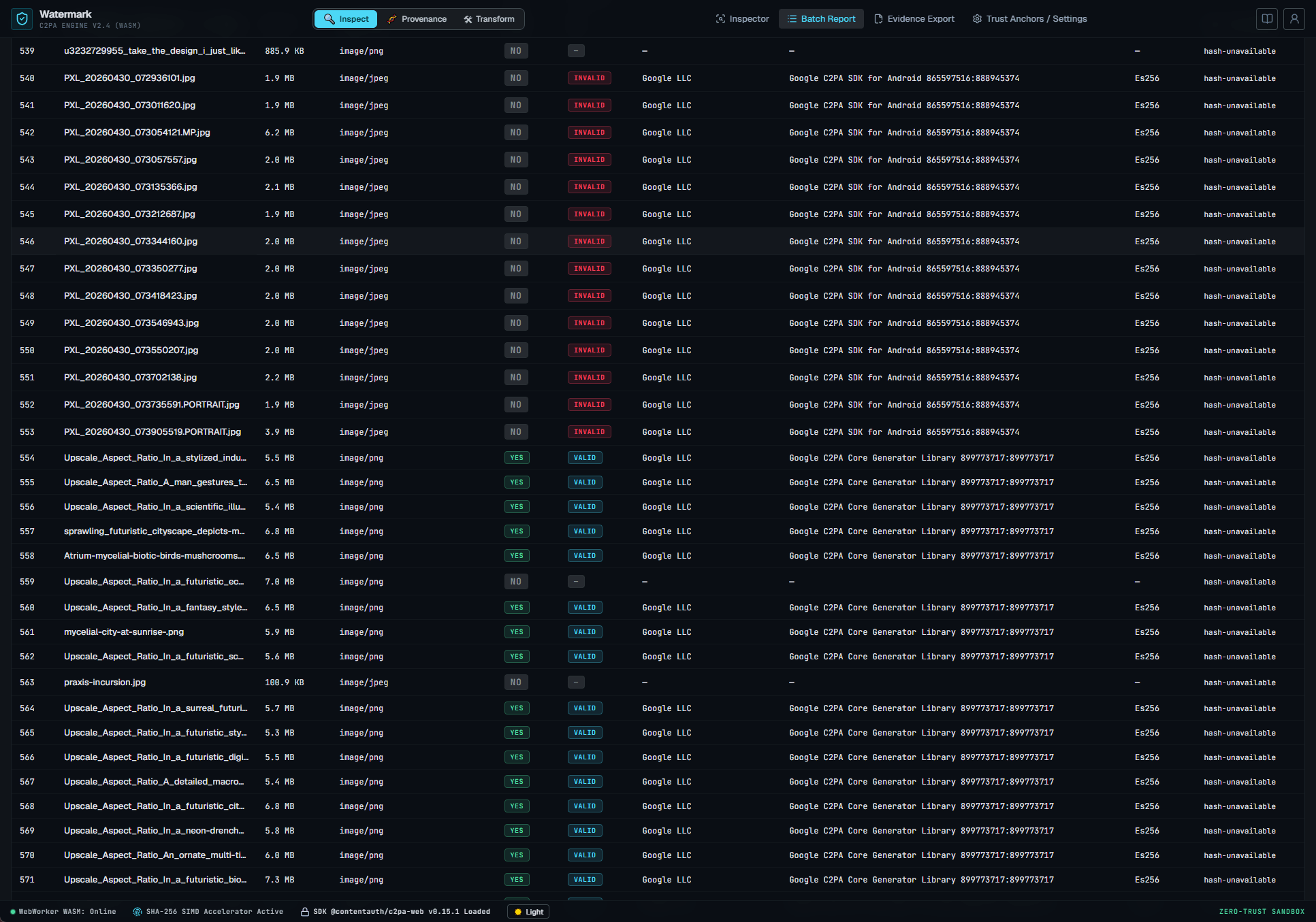
Batch Media
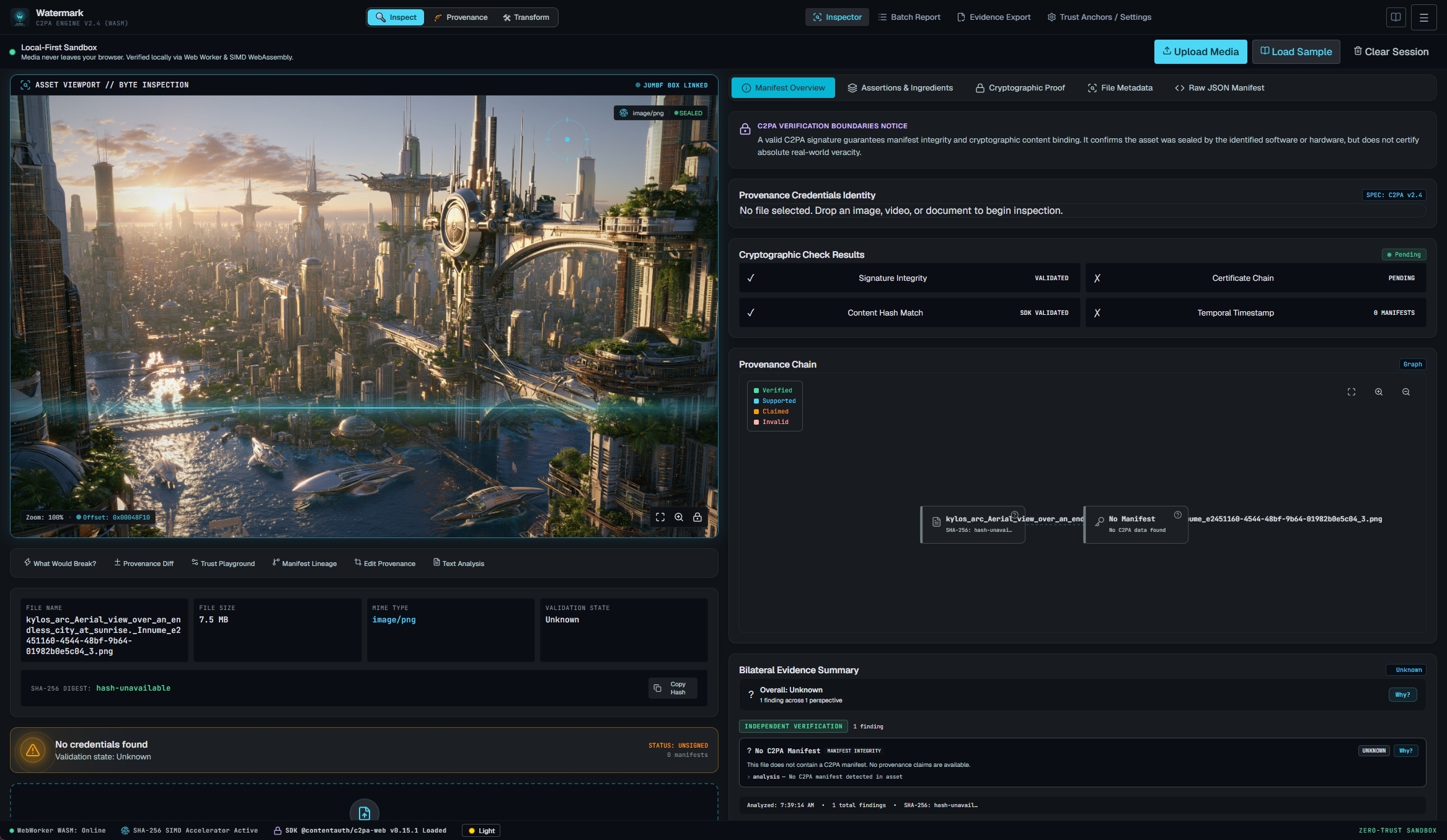
Media Inspector
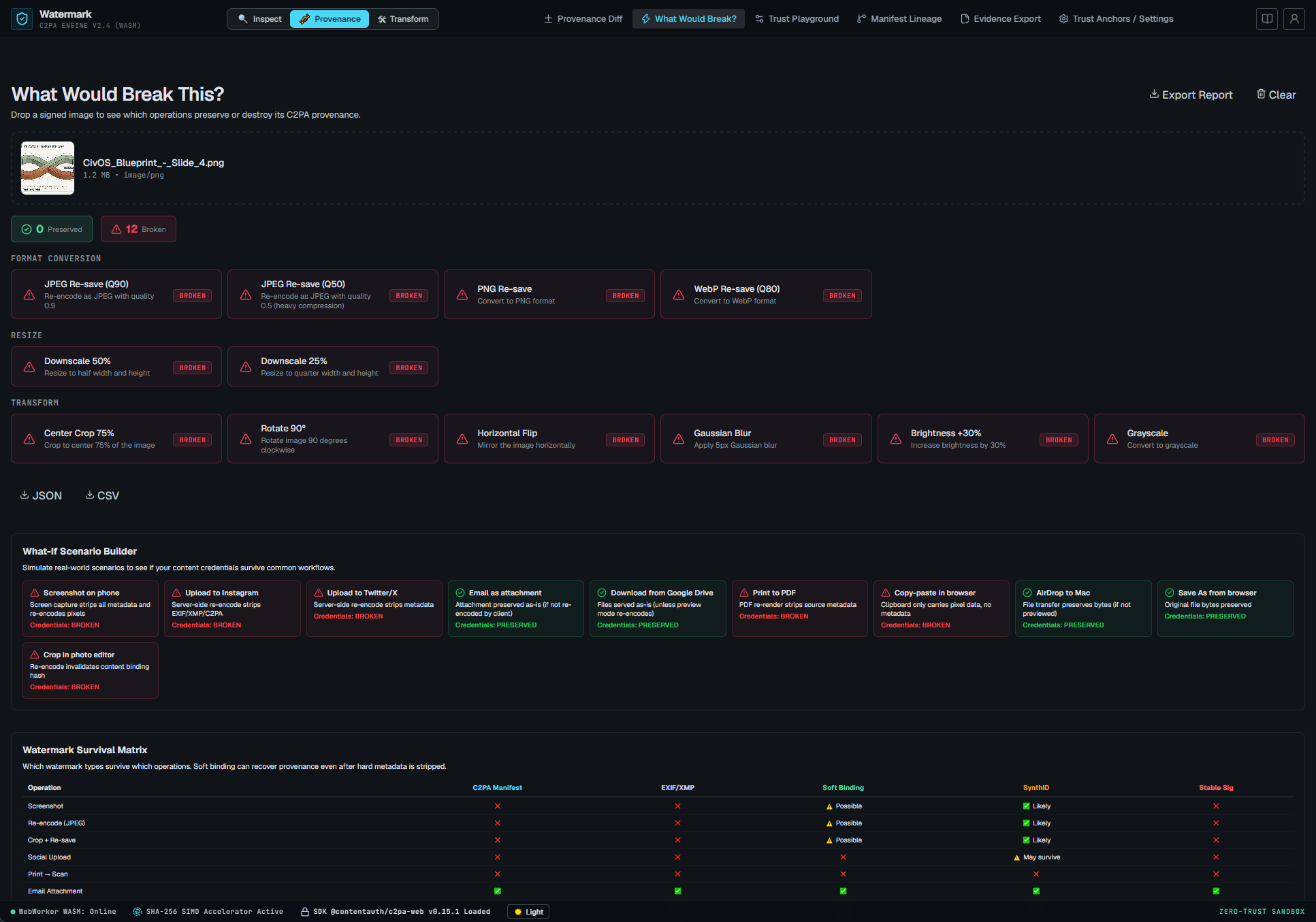
What Would Break
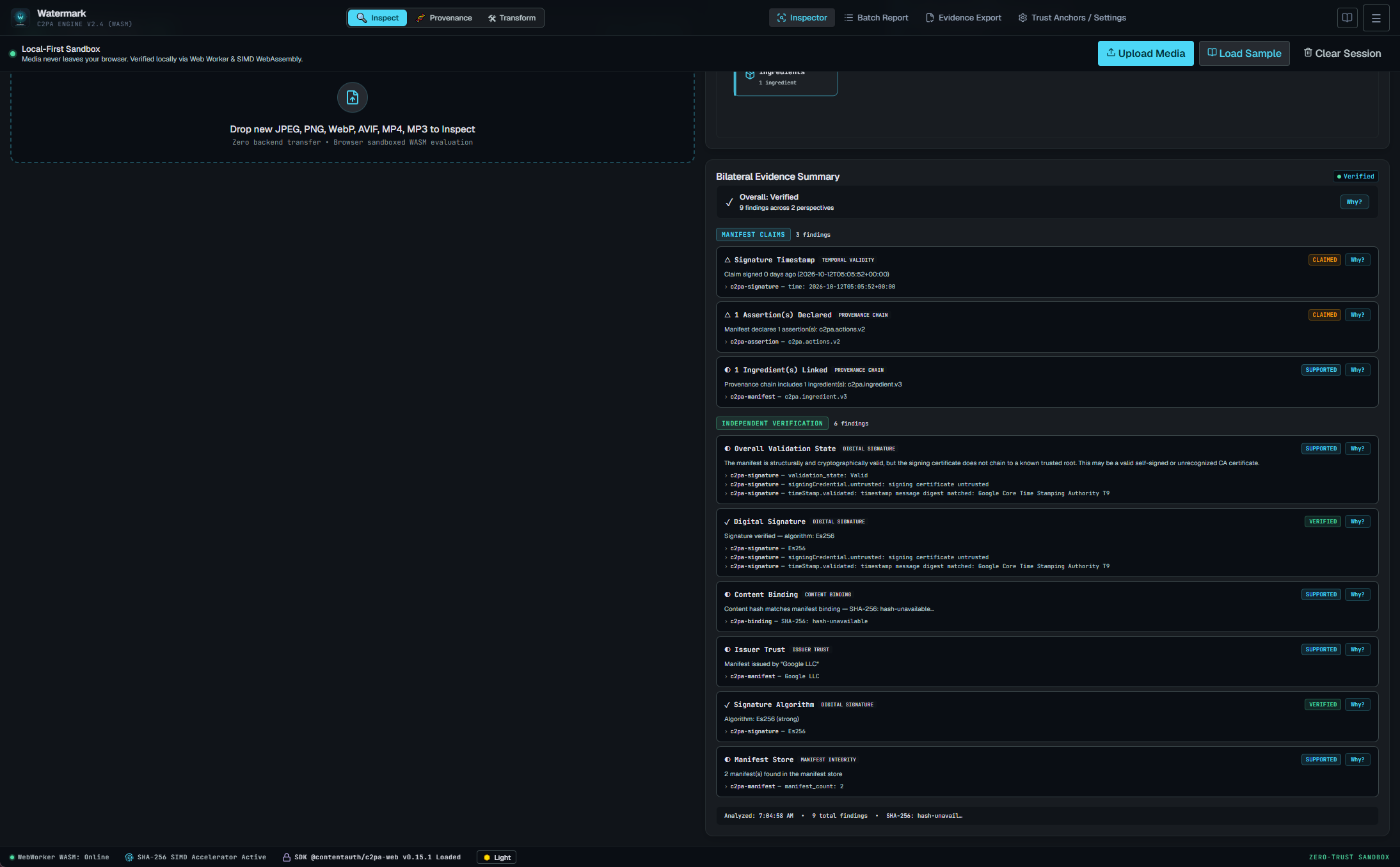
Bilateral Evidence Summary
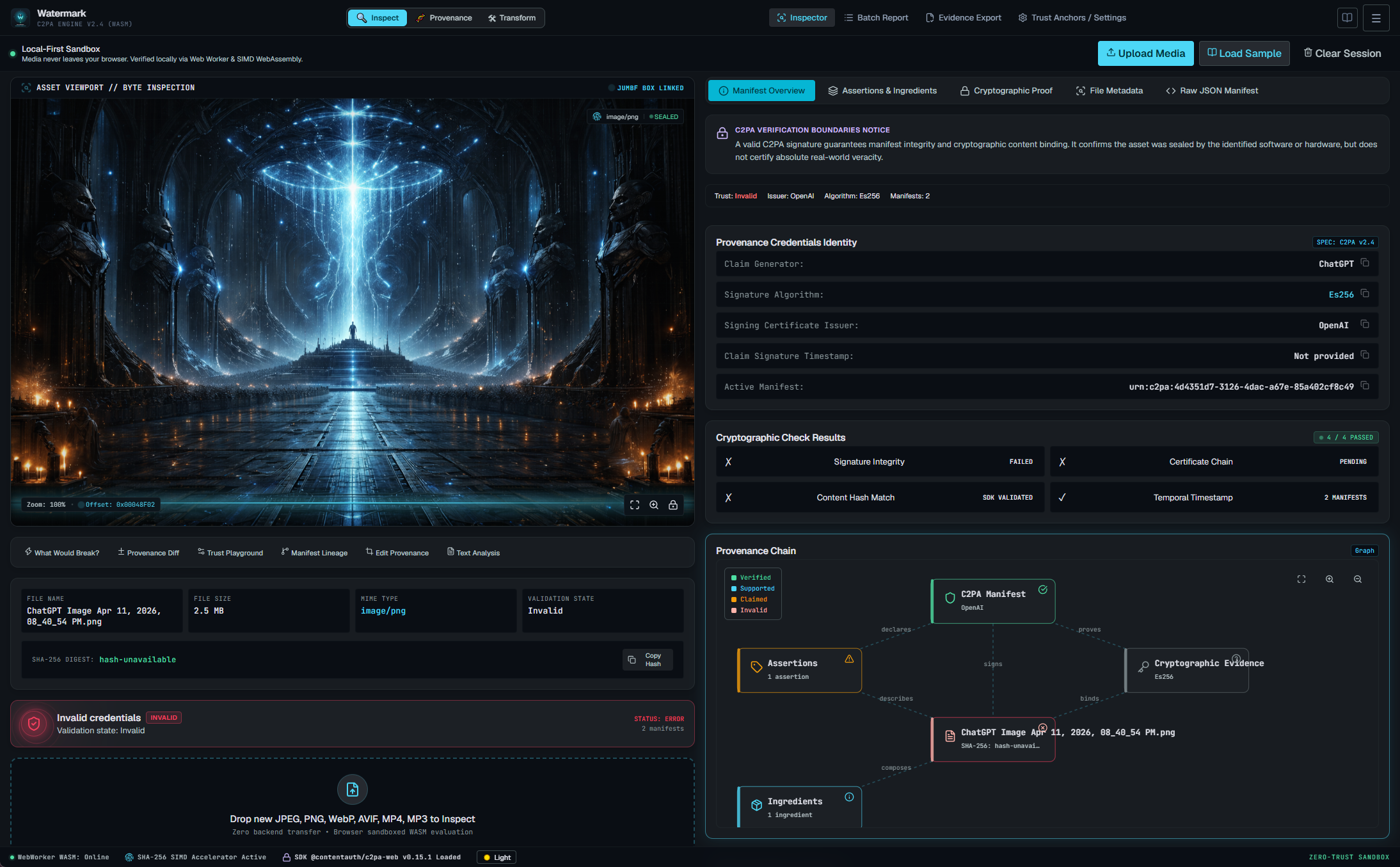
Inspector

Watermark
A local-first provenance and forensic workbench for C2PA Content Credentials, media, documents, and text.
Watermark lets you inspect what a file claims about its origin and history, verify what can actually be cryptographically verified, examine metadata and content bindings, compare provenance across versions, and investigate AI-generation and watermark signals — entirely in your browser.
Your files stay on your machine.
A claim is not the same thing as a verification.
Watermark is designed around that distinction. A C2PA manifest can contain assertions about an asset’s origin, creation, modification, or processing history. Watermark helps you examine those assertions, validate the cryptographic relationships that can be validated, and see where the evidence ends.
Why Watermark?
Digital proenance systems are becoming an increasingly important part of how digital content is identified, attributed, and trusted. But provenance is not a binary question of “authentic” or “fake.”
A useful inspection tool needs to let people see:
- what a file contains;
- what a C2PA manifest claims;
- which signatures and content bindings validate;
- whether an issuer is trusted;
- what metadata exists outside the manifest;
- what provenance relationships exist between assets;
- what survives common transformations;
- and what cannot be established from the available evidence.
Watermark puts those questions into a single local-first workspace.
What Watermark Can Do
🔐 Verify Provenance
- Discover C2PA Content Credentials
- Validate manifest signatures and content bindings
- Display issuer and certificate information
- Distinguish Trusted, Valid, Invalid, and Unknown
- Calculate SHA-256 file digests
- Inspect hard and soft content bindings
- Examine complete manifest JSON
🔎 Investigate Provenance
- Explore manifests, assertions, and ingredients
- Examine manifest lineage
- Compare two provenance states with Provenance Diff
- Generate structured Evidence Packs
- Review file metadata alongside C2PA provenance
- Inspect binary structure and entropy
- Examine what survives common transformations
💧 Investigate Watermarks & AI Signals
- Surface watermark-related C2PA assertions
- Surface SynthID-related claims when present
- Inspect C2PA soft-binding information
- Identify C2PA AI-generation source-type assertions
- Compare watermark/provenance survival across transformations
🧪 Test & Simulate
- Re-encode media
- Crop images
- Convert formats
- Test whether provenance survives transformations
- Explore common scenarios such as screenshots, email, and social-media processing
- Experiment with trust policies
🛠️ Work With Your Files
- Edit selected metadata
- Sanitize metadata
- Compare hashes before and after changes
- Perform provenance-aware image editing
- Extract text from supported documents
- Analyze and transform text
- Produce self-contained trust reports
🔒 Local-First Privacy
Files are processed in the browser rather than uploaded to a remote analysis service.
Original files are not overwritten. Processing occurs in memory, with local persistence used for application state and audit information.