The food production and nutritional architecture within the Cognoscentae Ultrans (CU) framework is defined by the “Universal Baseline Guarantee,” an absolute mandate that decouples human sustenance from labor, economics, and Darwinian scarcity. To fulfill this mandate for a projected planetary population of 10 billion without exceeding Earth’s ecological carrying capacity, the CU replaces the thermodynamic inefficiencies of traditional agriculture with a highly automated, bio-digital production layer known as the “Megatecture”.
Here is the structural blueprint and critical analysis of food production and nutrition in the CU:
1. The Eradication of Traditional Animal Agriculture
Conventional meat production is a thermodynamic failure; for example, a chicken requires nine calories of feed to produce a single calorie of meat, resulting in an 88% caloric waste. Furthermore, animal agriculture utilizes over 75% of global agricultural land while supplying less than 20% of the world’s calories, driving deforestation, water contamination, and massive greenhouse gas emissions.
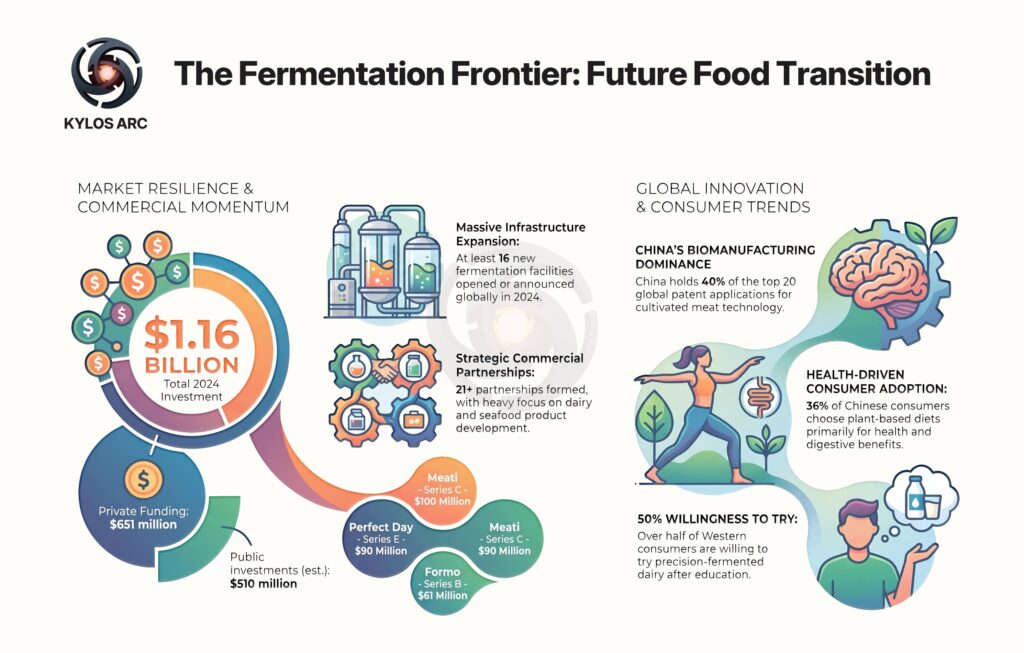
The CU achieves nutritional security through a “Protein Transition,” shifting reliance entirely to precision fermentation, gas fermentation, and advanced fungal upcycling. This shift reduces the agricultural land requirement by up to 75% (an area equivalent to North America and Brazil combined), freeing vast tracts of land for ecological restoration and carbon sequestration.
2. Precision Fermentation: Bioidentical Proteins
Precision fermentation is the primary engine for synthesizing high-value proteins, fats, and functional ingredients. Microorganisms—such as Pichia pastoris, Saccharomyces cerevisiae, or Trichoderma reesei—are genetically programmed to synthesize target proteins like whey (beta-lactoglobulin), casein, ovalbumin, and myoglobin.
- Nutritional Equivalence: These bio-manufactured proteins are chemically identical to their animal-derived counterparts, providing identical amino acid profiles and functional properties (e.g., the melt and stretch of dairy cheese, the foaming of egg whites) without the environmental burden.
- Infant and Medical Nutrition: Precision fermentation allows for the exact replication of complex human milk proteins, such as lactoferrin and alpha-lactalbumin, producing infant formula that is nutritionally superior and biochemically identical to human breast milk.
- Environmental Efficiency: Producing protein via precision fermentation utilizes up to 90% less land, 77% less water, and generates up to 97% fewer greenhouse gas emissions compared to conventional dairy and meat production.
3. Alternative Metabolic Pathways: Gas and Solid-State Fermentation
Relying entirely on light-dependent microalgae (photobioreactors) or submerged liquid fermentation introduces severe capital and energy bottlenecks. The CU blueprint mitigates this through two alternative, highly scalable paradigms:
- Hydrogenotrophic (Gas) Fermentation: Chemoautotrophic bacteria (e.g., Cupriavidus necator) are utilized to consume carbon dioxide and green hydrogen to produce complete single-cell proteins. This mechanism bypasses photosynthesis entirely, decoupling protein synthesis from arable land and light requirements, and resulting in superior substrate conversion efficiency.
- Solid-State Fungal Fermentation (SSF): Filamentous fungi are cultivated on solid, moist lignocellulosic waste streams (agricultural byproducts) to break down tough carbohydrates into dense, high-fiber mycelial protein networks. This acts as a zero-waste, circular mechanism that scavenges existing chemical energy, requiring a fraction of the water and electricity of submerged fermentation.
4. Algorithmic Genetic Engineering and Nanotechnology
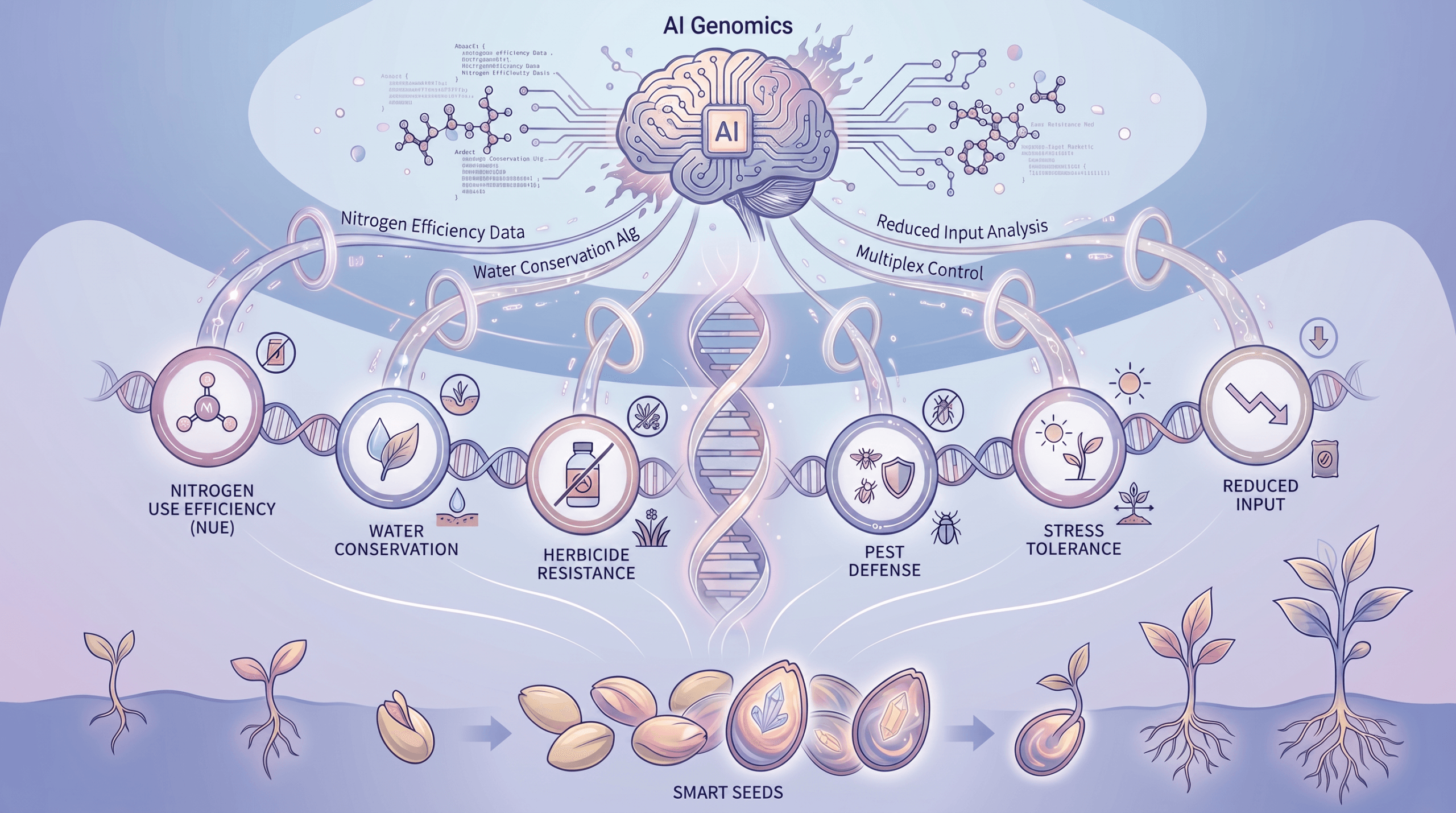
For necessary terrestrial crop production, the CU relies on multiplex gene editing (such as CRISPR-Cas9) driven by AI genomics. These genetic interventions are designed not merely for yield enhancement, but for radical input reduction—engineering smart seeds capable of yielding up to 20% more caloric output while requiring 40% less nitrogen fertilizer and 40% less water.
Simultaneously, the deployment of nanotechnology in agriculture—such as biopolymer-based nanocarriers, nano-fertilizers, and nanosensors—allows for the precise, targeted delivery of nutrients directly to the root zones of crops. This prevents nutrient runoff, halts the eutrophication of aquatic ecosystems, and actively facilitates the nanophytoremediation of soils previously contaminated by heavy metals and legacy pesticides.
Critical Weak Points and Necessary Redundancies
- The Thermodynamic Deficit: Precision and gas fermentation are completely reliant on immense, uninterrupted baseload electricity to maintain bioreactor temperatures, continuous aeration, and electrolysis for hydrogen production. If the CU’s Layer 1 Substrate—specifically the Space-Based Solar Power (SBSP) arrays or Deep Geothermal Gyrotrons—fails or suffers latency, the biological production layer collapses immediately.
- Thermal Dynamics of Solid-State Fermentation: SSF is highly susceptible to heat and mass transfer bottlenecks at commercial scales; as the fungi metabolize waste, they generate immense localized heat that can quickly kill the culture. The CU must deploy granular telemetry, using distributed microcontrollers (e.g., ESP32 sensors) embedded within the substrate beds to trigger automated, precise aeration and cooling, or the system will fail to scale.
- The Biological Monoculture Threat: Relying on specifically engineered strains of yeast or bacteria for the global protein supply introduces the risk of catastrophic biological contamination or phage infections that could wipe out entire production lines simultaneously. The CU must maintain decentralized, physically isolated bioreactor networks and deep-freeze genetic seed banks to prevent systemic starvation events.
Latest News and Talk about Agricultural Technologies and Trends in Food Production
BRIEF
CRISPR technology is revolutionizing crop biotechnology by enabling precise gene editing that enhances agricultural productivity and resilience. Recent developments highlight the efficiency of the CRISPR-Cas9 system, which has been shown to significantly improve genetic modifications in crops. For instance, a study published on September 8, 2026, indicates that delivering CRISPR components in assembled forms can yield better results than traditional transgenic methods, particularly in mass crop production (Wikipedia). This advancement is crucial as global food demands rise, necessitating innovative approaches to crop cultivation (The Science Atlas).
Gene-edited crops are gaining traction in various markets, with notable trials demonstrating their potential. Corteva Agriscience's gene-edited soybeans recently thrived in a UK trial, showcasing their viability in producing home-grown protein sources (AgNavigator). Similarly, a startup called Nurtured Nuts has developed allergen-less peanuts using CRISPR technology, addressing significant health concerns associated with peanut allergies (Informa Markets). These examples underscore the practical applications of CRISPR in creating crops that meet consumer needs while enhancing food safety.
The regulatory landscape surrounding CRISPR crops remains complex and contentious. The distinction between transgenic crops, which involve gene insertion from different species, and cisgenic editing, which modifies existing genes within the species, is pivotal. This differentiation affects public perception and regulatory approval processes (The Science Atlas). As countries like India advance their regulatory frameworks—evidenced by the introduction of genome-edited rice varieties in May 2025—there is a growing recognition of the need for clear guidelines that facilitate the adoption of CRISPR technology in agriculture (IASPOINT).
Precision agriculture is increasingly integrating CRISPR technology to enhance crop resilience against climate change and abiotic stressors. Research published on August 31, 2026, highlights the role of CRISPR in developing crops that can withstand environmental challenges, thereby securing food supplies in a changing climate (Discover Plants). This integration is essential as agricultural practices evolve to meet the demands of a growing global population, with CRISPR offering a pathway to more sustainable farming practices.
Investment and employment trends in the CRISPR sector indicate a focus on innovation and enterprise readiness. Companies are increasingly seeking talent in AI and machine learning to enhance their CRISPR applications, as evidenced by recent job postings at the Donald Danforth Plant Science Center (ZipRecruiter). This trend reflects a broader shift towards integrating advanced technologies in crop biotechnology, aiming to improve both the efficiency and reliability of gene-edited crops.
KEY PATTERNS from the research:
1. CRISPR-Cas9 efficiency is enhanced by delivering components in assembled forms.
2. Gene-edited crops like soybeans and peanuts are being actively trialed and commercialized.
3. Regulatory frameworks are evolving to accommodate the unique aspects of CRISPR technology.
4. Precision agriculture is leveraging CRISPR to develop climate-resilient crops.
5. Increased hiring in AI and machine learning reflects a trend towards tech integration in crop biotechnology.
6. Public perception of CRISPR crops is influenced by the distinction between transgenic and cisgenic editing.
7. Startups are emerging to address specific consumer needs through gene editing.
8. Global food security is a driving force behind the adoption of CRISPR technology in agriculture.
Freshness
- 8 of 28 dated items are from the last 7 days.
Hiring Signals
- Mode: explicit; company-size tier: startup
- Interpret these as focus or priority signals, not exact roadmap predictions.
- ai and machine learning: appears to be increasing focus on ai and machine learning (confidence: low; evidence: 2 roles)
- DONALD DANFORTH PLANT SCIENCE CENTER Postdoctoral Research Associate Job Saint Louis, MO (2026-08-19)
- TAIR - Arabidopsis (2026-09-03)
- enterprise readiness: appears to be increasing focus on enterprise readiness (confidence: low; evidence: 1 roles)
- DONALD DANFORTH PLANT SCIENCE CENTER Postdoctoral Research Associate Job Saint Louis, MO (2026-08-19)
- infrastructure and reliability: appears to be increasing focus on infrastructure and reliability (confidence: low; evidence: 1 roles)
- DONALD DANFORTH PLANT SCIENCE CENTER Postdoctoral Research Associate Job Saint Louis, MO (2026-08-19)
- product expansion: appears to be increasing focus on product expansion (confidence: low; evidence: 1 roles)
- DONALD DANFORTH PLANT SCIENCE CENTER Postdoctoral Research Associate Job Saint Louis, MO (2026-08-19)
Ranked Evidence Clusters
CRISPR gene editing - Wikipedia
Source: Web | Date: 2026-09-08
Score: 39
CRISPR in Agriculture & Animals - The Science Atlas
Source: Web | Date: 2026-08-23
Score: 30
A pervasive RT–qPCR artifact inflates RNA knockdown by RNA-targeting CRISPR
Source: Hacker News | Date: 2026-09-01
Score: 30 | Points: 1
Stats
- Total evidence: 28 items across 5 sources
- Top voices: Hacker News, web, en.wikipedia.org, agfundernews.com, deepseek-launch-community/XuanJi-ISA
- GitHub: 2 items | 13 comments | voices: deepseek-launch-community/XuanJi-ISA, buckeye7066/GrantFlow
- Web: 8 items | domains: en.wikipedia.org, agfundernews.com, geneticliteracyproject.org
- Hacker News: 7 items | 27 points, 3 comments | domains: Hacker News
- Jobs: 3 items | voices: web
- Reddit: 8 items | communities: r/EcoUplift, r/explainlikeimfivebook, r/nutritionally
Web Research
Gene-edited soybeans thrive in UK trial as Corteva eyes home-grown protein future
Published: 2026-09-08T13:30:15+00:00 Source: agnavigator.com (agnavigator.com) Language: en Story Gene-edited soybeans thrive in UK trial as Corteva eyes home-grown protein futuredefault-output-block.skip-main Gene-edited soybeans thrive in UK trial as Corteva eyes home-grown ...
Source: agnavigator.com | Date: 2026-09-08
Seedless Blackberries and Cherries That Grow on Bushes Vie to Be the Future of Food | WIRED
Food | WIRED Mike Grunwald Aug 11, 2026 6:00 AM Seedless Blackberries and Cherries That Grow on Bushes Vie to Be the Future of Food Startups and Big Ag are using Crispr gene editing to create crops that taste better and grow on a hotter planet. But will they find a market? ...
Source: wired.com | Date: 2026-08-11
Crispr fine-tuning unlocks vitamin C-rich potatoes without yield loss | Newswise
Crispr fine-tuning unlocks vitamin C-rich potatoes without yield loss 9-Sep-2026 at 10:45 AM EDT, by Chinese Academy of Sciences A schematic diagram illustrating the changes in Vc content mediated by CRISPR/Cas9-based genome editing of the uorf-StGGP1-A/B. Potato is a central ...
Source: newswise.com | Date: 2026-09-09
Startup creates ‘allergen-less’ peanuts using CRISPR
Startup creates ‘allergen-less’ peanuts using CRISPR US-based startup Nurtured Nuts uses CRISPR gene editing to remove some of the allergens responsible for anaphylaxis from peanuts. Tessa Wiles, Content Editor, Informa Markets September 9, 2026 At a Glance - Gene edits are made ...
Source: insights.figlobal.com | Date: 2026-09-09
Engineering herbicide-resistant sorghum with CRISPR/Cas9-mediated adenine base editing
Engineering herbicide-resistant sorghum with CRISPR/Cas9-mediated adenine base editing Jianshuang Zhou 1,2†, Ruirui Li 3†, Zhi Wang 1, Shaoxiong Liu 1, Lingyue Shi 1, Xiao Fu 1, Fei Li 1,2, Ji Zhang 1, Guiying Li 1, Jinjie Zhu 1, Qian Qian 1 and Baoqing Dun 1,2 1. 1. The ...
Source: jipb.net | Date: 2026-09-01*
Comprehensive molecular characterization and biosafety assessment of TaDOF7.6 transgenic and gene-edited wheat | BMC Plant Biology | Springer Nature Link
Plant Biology | Springer Nature Link Comprehensive molecular characterization and biosafety assessment of TaDOF7.6 transgenic and gene-edited wheat - Research - Open access - Published: 11 August 2026 - Shan Gao 1 na1, - Uzair Ullah 1 na1, - Jiahui Jin 1, - Yutong Shi 1, - ...
Source: link.springer.com | Date: 2026-08-11
Fidelity and Delivery: Coupled Barriers in Plant CRISPR-Cas Genome Editing
Review Article · Published: 11 August 2026 Fidelity and Delivery: Coupled Barriers in Plant CRISPR-Cas Genome Editing by Ali Movahedi 1 * (ali_movahedi@njfu.edu.cn) 1 State Key Laboratory of Tree Genetics and Breeding, College of Life Sciences, Nanjing Forestry University ...
Source: icck.org | Date: 2026-08-11
Genetically engineered crop adoption support yields and cultivation under climate change | Nature Climate Change
Change Your privacy, your choice We use essential cookies to make sure the site can function. We also use optional cookies for advertising, personalisation of content, usage analysis, and social media, as well as to allow video information to be shared for both marketing ...
Source: nature.com | Date: 2026-09-08
Policy Implications of Genome-Edited Crops | IASPOINT
Policy Implications of Genome-Edited Crops August 20, 2026 Mains Backgrounders On 4 May 2025, Union Agriculture Minister Shivraj Singh Chouhan announced India’s first two genome-edited rice varieties in New Delhi: DRR Dhan 100 (Kamala) and Pusa DST Rice 1. Both were developed ...
Source: iaspoint.com | Date: 2026-08-20
What are the potential environmental impacts of using CRISPR-modified organisms? | Life Extension - www.zdwords.com
www.zdwords.com What are the potential environmental impacts of using CRISPR-modified organisms? Sep 8, 2026 10:33 AM Spread the love Potential Environmental Impacts of Using CRISPR-Modified Organisms CRISPR (Clustered Regularly Interspaced Short Palindromic Repeats) is a ...
Source: zdwords.com | Date: 2026-09-08
Deciphering abiotic stress resilience in crop plants through multiomics insights and CRISPR Cas9 mediated genome editing | Discover Plants | Springer Nature Link
genome editing | Discover Plants | Springer Nature Link Deciphering abiotic stress resilience in crop plants through multiomics insights and CRISPR Cas9 mediated genome editing - Review - Open access - Published: 31 August 2026 - Richa Omer 1, - Sanchi Singh 1 & - Jyoti Mathur 1 ...
Source: link.springer.com | Date: 2026-08-31
More Berries Per Acre. Fewer Chemicals. How Close Is Gene-Edited Food to Delivering on Its Promise? | Food and Environment Reporting Network
Reporting Network How Close Is Gene-Edited Food to Delivering on Its Promise? A North Carolina startup is betting on the speed of CRISPR to deliver the crops we need to feed a crowded, hotter planet. But the technology still has its doubters. WIRED Pairwise CEO Tom Adams checks ...
Source: thefern.org | Date: 2026-08-11
✅ All agents reported back! ├─ 🟠 Reddit: 8 threads ├─ 🟡 HN: 7 stories │ 27 points │ 3 comments ├─ 🐙 GitHub: 2 items │ 13 comments ├─ 💼 Jobs: 3 roles ├─ 🌐 Web: 8 pages - en.wikipedia.org, geneticliteracyproject.org, thescienceatlas.com, agrilifetoday.tamu.edu, agfundernews.com, mdpi.com └─ 🗣️ Top voices: r/EcoUplift, r/explainlikeimfivebook, r/nutritionally